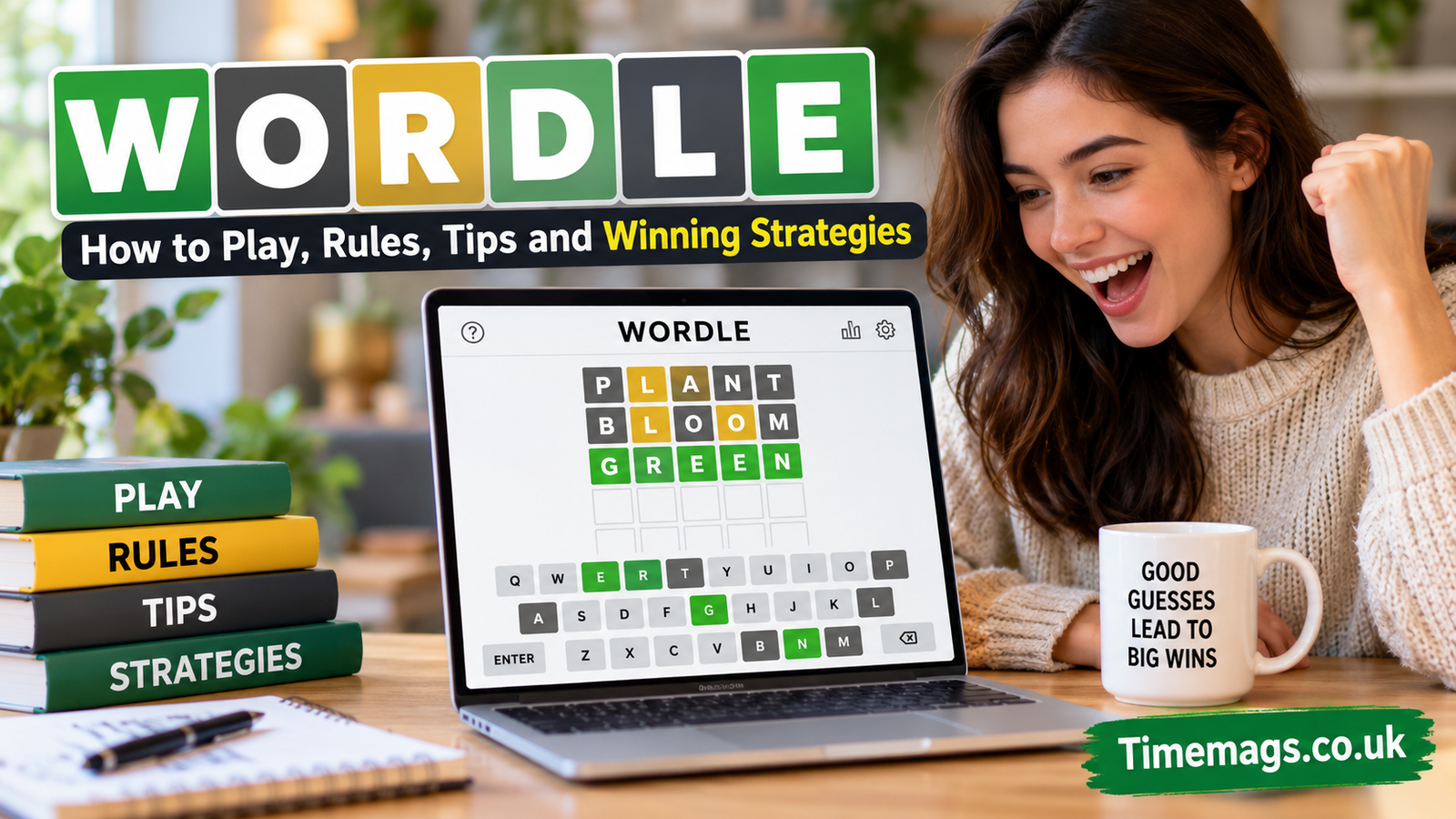
Wordle Game How to Play Rules Tips and Winning Strategies
The Wordle game is a daily word puzzle in which players have six attempts to guess a hidden five-letter word. After every guess, coloured tiles reveal whether each letter is correct, misplaced or absent from the answer. Its simple rules, quick gameplay and one-puzzle-per-day format have helped make Wordle one of the best-known online word games in the world.
Created by software engineer Josh Wardle, Wordle began as a personal project before becoming an international phenomenon. The New York Times acquired the game in early 2022 after its rapid rise in popularity.
What Is the Wordle Game?
Wordle Game is a word-guessing puzzle built around a straightforward challenge: identify a five-letter word within six guesses.
You enter a valid five-letter word, submit it and then use the coloured feedback from the game to improve your next attempt. Rather than giving traditional clues, Wordle tells you whether individual letters belong in the solution and whether they are positioned correctly.
The basic objective is:
- Guess one five-letter word.
- Study the colour of each tile.
- Eliminate unlikely letters.
- Reposition letters that are present.
- Find the answer before using all six attempts.
A new puzzle is traditionally presented each day, which gives Wordle a different rhythm from games that encourage unlimited rounds. The original format was deliberately designed as a short daily experience rather than something players had to spend hours completing.
How to Play Wordle
Learning how to play Wordle takes only a few minutes.
Start by entering any accepted five-letter word. A strong opening guess normally contains several common letters and avoids unnecessary repetition.
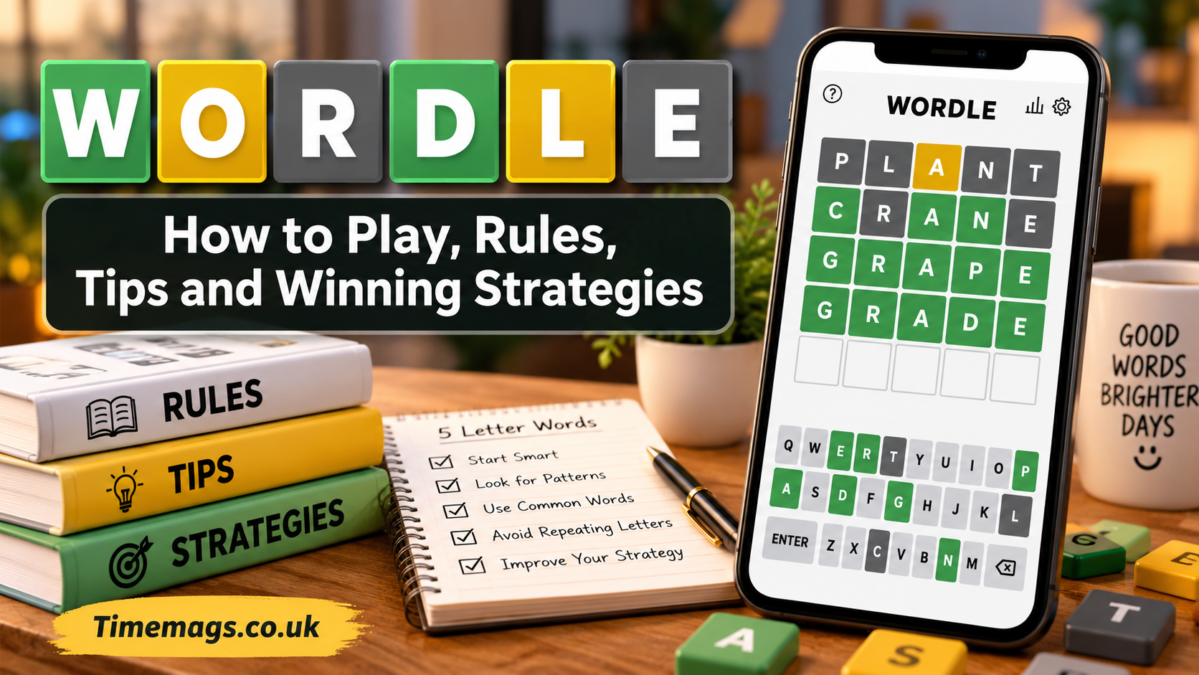
After submitting the word, each letter receives colour-coded feedback.
Green Tiles
A green tile means:
The letter is correct and is already in the correct position.
For example, if you guess:
CRANE
and the letter A becomes green, you know that the solution contains A in exactly that position.
Keep that letter fixed whenever possible in later guesses.
Yellow Tiles
A yellow tile means:
The letter appears in the answer, but you have placed it in the wrong position.
You should use the letter again while moving it somewhere else.
Yellow tiles are especially valuable because they narrow both the possible letters and their locations.
Gray Tiles
A gray tile generally tells you that the guessed letter is not part of the solution in the way you have used it.
That means you can normally avoid that letter in your next attempt and test new possibilities instead.
Players should remember that repeated letters can make the interpretation slightly more complicated. A word may contain the same letter more than once, which is one reason apparently simple Wordle puzzles can become difficult.
Wordle Game Rules
Wordle’s popularity comes partly from having very few rules.
The essential rules are:
- The solution contains five letters.
- You have a maximum of six guesses.
- Each submitted guess must be an accepted word.
- Green indicates a correct letter in the correct position.
- Yellow indicates a correct letter in the wrong position.
- Gray helps eliminate letters that do not fit the solution.
- Your previous guesses remain visible while you solve the puzzle.
The challenge is not simply knowing many words. You also need to make good decisions with limited information.
A player who uses every guess to gather useful information can often outperform someone who simply enters the first possible word that comes to mind.
Best Wordle Starting Strategy
There is constant debate over the “best” Wordle starting word.
In practice, a useful starter should help you discover as much information as possible.
Use Common Vowels
English words frequently contain vowels such as:
- A
- E
- I
- O
- U
Testing multiple vowels early can reveal the basic structure of the solution.
However, using a starting word containing four or five vowels is not always necessary. Common consonants are just as important.
Test Common Consonants
Letters such as:
R, S, T, L, N and C
appear frequently enough in English that they can be useful early choices.
A balanced opening word containing both common vowels and consonants gives you information about several possibilities at once.
Avoid Repeating Letters Too Early
Unless you have evidence that the solution contains a repeated character, it is often better to test five different letters on your first attempt.
For example, a word containing two of the same letter gives you information about fewer unique letters.
Later in the puzzle, repeated-letter guesses may become essential.
How to Get Better at the Wordle Game
Consistent Wordle players usually develop a process rather than relying entirely on luck.
1. Treat Every Guess as Information
Your first few attempts should do more than try to win immediately.
Suppose you know:
- R is in the word.
- E is green at the end.
- A, T and S are absent.
Your next guess should respect that information while testing useful new letters.
Random guessing wastes valuable attempts.
2. Pay Attention to Letter Positions
Knowing that a letter exists is only half of the puzzle.
If a yellow R has already failed in positions two and four, those positions become less useful for R in your next guess.
Tracking position restrictions can quickly reduce the number of possible solutions.
3. Think About Common Letter Combinations
English words frequently use combinations such as:
- CH
- SH
- ST
- TR
- CR
- TH
- BR
- PL
Recognizing familiar patterns can help when several letters have already been discovered.
If you know the pattern looks like:
_ R A _ E
your job becomes much easier than searching the entire five-letter vocabulary.
4. Remember Double Letters
One of the easiest Wordle mistakes is assuming that every letter appears only once.
Possible answers can contain repeated letters.
When you have identified most of a word but nothing seems to fit, consider whether one of the known letters may appear twice.
5. Do Not Rush
There is little benefit in entering a guess immediately.
Review every green, yellow and gray tile first.
A few extra seconds of reasoning can prevent an avoidable mistake.
Should You Use the Same Starting Word Every Day?
Both approaches have advantages.
Using the same starter every day gives you a familiar system. You already know which important vowels and consonants it checks.
Changing your starting word can make the game more varied and may occasionally produce an excellent opening result.
For most players, the exact starting word matters less than what they do after receiving the first set of clues.
Good Wordle solving is adaptive.
Your second and third guesses should respond intelligently to the board rather than following a fixed script.
Why Did Wordle Become So Popular?
Wordle’s success is unusual because the concept is extremely simple.
Josh Wardle originally created the game for his partner, who enjoyed word puzzles. It later spread to family members and eventually became publicly available. Its audience grew dramatically, rising from a relatively small number of players to hundreds of thousands and then millions.
Several features helped it stand out.
One Puzzle Per Day
Instead of encouraging endless gameplay, Wordle created scarcity.
Players completed one puzzle and then returned later for another.
That limitation became part of the appeal rather than a disadvantage.
Easy-to-Share Results
The familiar grid of green, yellow and gray squares allowed people to share their performance without revealing the day’s answer.
This created conversations and friendly competition while avoiding spoilers.
The sharing feature played an important role in Wordle’s rapid growth on social media.
Very Simple Design
Players did not need to learn complicated controls.
Open the game, type a word and start solving.
That accessibility made it appealing to different age groups and to people who would not necessarily describe themselves as gamers.
Everyone Faces the Same Challenge
The shared daily puzzle created a social experience.
Friends, colleagues and families could compare how many guesses they needed to solve the same word.
Who Created Wordle?
Wordle was created by Welsh software engineer Josh Wardle.
The game’s name is a playful reference to his surname.
Wardle developed the puzzle for his partner before eventually making it available to a much larger audience. The game launched publicly in 2021 and gained extraordinary momentum toward the end of that year and the beginning of 2022.
Who Owns Wordle Now?
The New York Times acquired Wordle from Josh Wardle in January 2022 for an undisclosed price described at the time as being in the “low seven figures.”
The acquisition followed Wordle’s transformation from a personal project into a game played by millions of people.
Wordle consequently became part of the broader New York Times Games offering.
Does Wordle Help Improve Vocabulary?
Wordle can expose players to unfamiliar words and encourage them to think carefully about spelling, letter combinations and vocabulary.
However, it is better viewed as an entertaining language puzzle than as a complete vocabulary-learning system.
Its strongest educational features are indirect. Players practise:
- Word recall
- Spelling recognition
- Pattern detection
- Deductive reasoning
- Letter-position analysis
- Logical elimination
Someone actively looking up unfamiliar answers afterward may gain more vocabulary value than someone who simply moves on after finishing each puzzle.
Common Wordle Mistakes to Avoid
Even experienced players can lose a puzzle because of small strategic errors.
One common mistake is reusing several gray letters. Unless you have a specific reason for doing so, those spaces could be used to test new possibilities.
Another problem is ignoring yellow positions. A yellow letter must normally move somewhere new, so repeatedly placing it in a location already shown to be incorrect wastes information.
Players also forget about duplicate letters. When four characters appear to fit but no obvious answer exists, a repeated letter may solve the problem.
Finally, avoid becoming attached to one possible answer too early. Wordle rewards elimination. Several words may fit the same pattern until additional letters are tested.
Conclusion
The Wordle game succeeds because it combines simple rules with surprisingly deep decision-making. You have only six chances to discover a five-letter word, but every green, yellow and gray tile provides information that can bring you closer to the answer.
Beginners can improve quickly by choosing balanced starting words, testing common letters, avoiding wasted guesses and carefully tracking letter positions. More experienced players can go further by identifying common patterns, considering repeated letters and treating every attempt as a strategic information-gathering decision.