Heardle How the Music Guessing Game Worked What Happened to It and How to Play Today
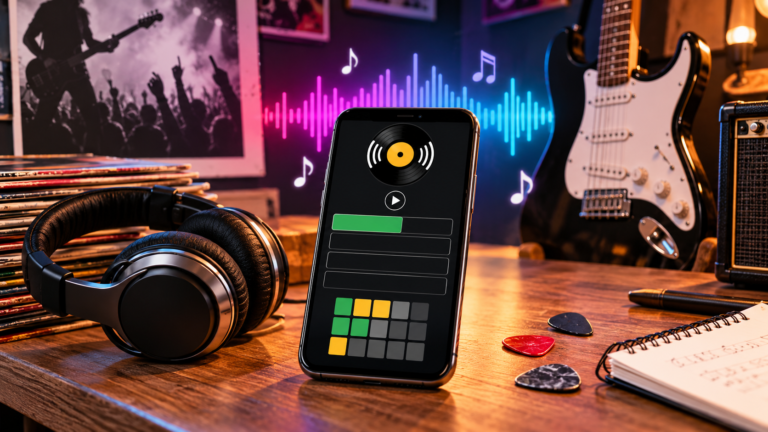
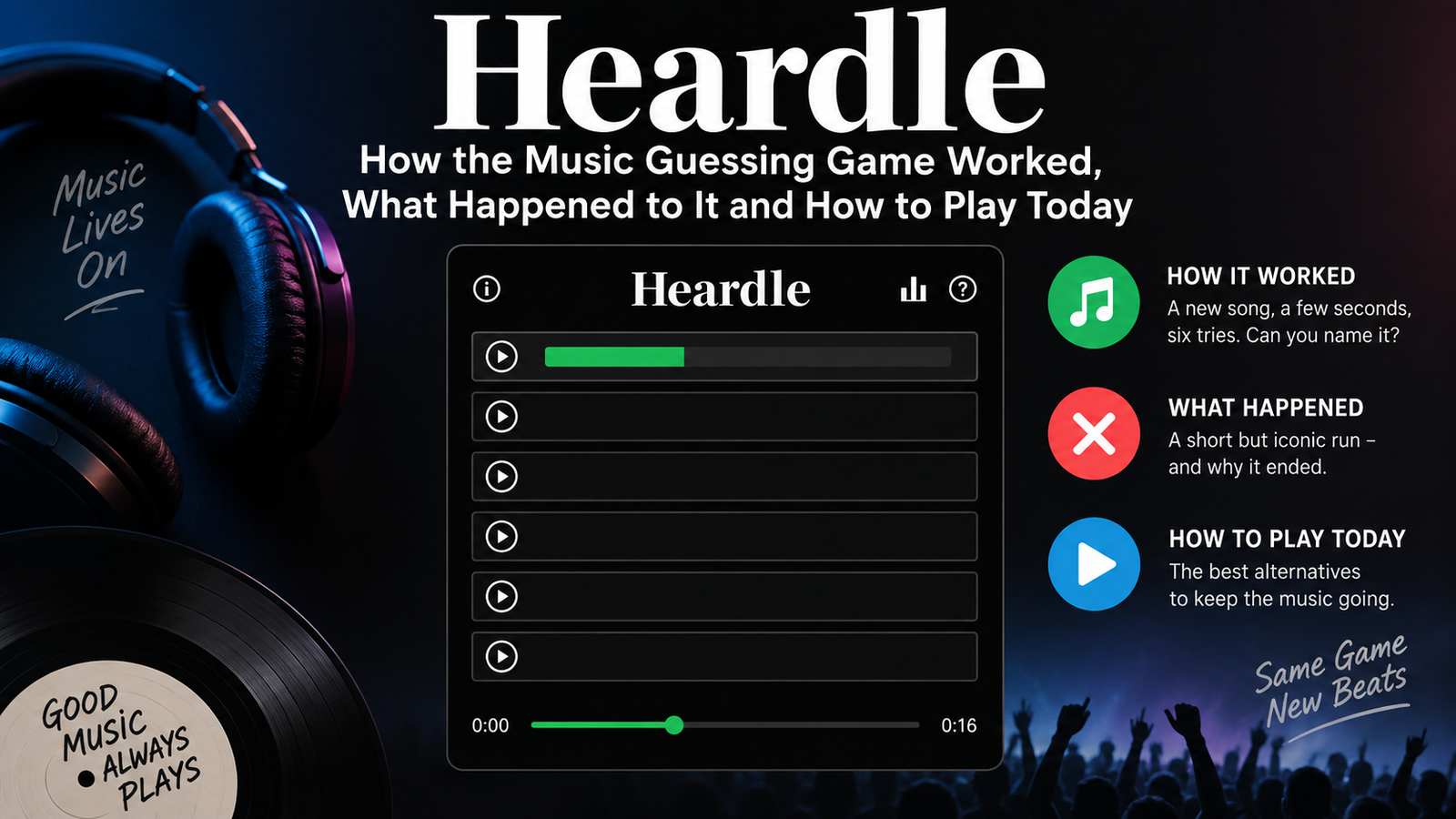
Heardle is a music guessing game concept in which players identify a mystery song by listening to a very short part of its intro. The original game became popular during the Wordle-inspired daily-game boom, giving players six attempts while revealing progressively more of the song after wrong guesses or skips. Spotify acquired Heardle in July 2022 but later discontinued the official version on May 5, 2023.
The original service is therefore no longer available as an official Spotify game. However, the Heardle idea remains popular, and independent music games inspired by the format continue to appear online. This guide explains the original Heardle, how its gameplay worked, why people enjoyed it, what happened after Spotify bought it, and what players should know about today’s Heardle-style websites.
What Is Heardle?
Heardle was essentially a daily music recognition challenge. Instead of solving a five-letter word, as players do in Wordle, users had to recognize a song from its opening notes.
The concept was intentionally simple. A player listened to a tiny piece of music and tried to identify the track. If the answer was wrong or the player chose to skip the game revealed more audio.
Players received up to six opportunities to find the correct answer. Spotify described Heardle as both a music trivia experience and a way of discovering songs and artists.
That combination was important to its appeal. Heardle was not a complicated music quiz requiring knowledge of release dates, albums or industry history. Recognition itself was the challenge.
You might hear a drum beat, guitar sound, synth, vocal or distinctive production effect and suddenly know exactly which song was playing.
How Did Heardle Work?
The original Heardle followed a straightforward daily puzzle format.
1. Listen to the Song Intro
The challenge started with an extremely short audio snippet from the mystery track.
That meant players needed to listen carefully. Sometimes a distinctive instrument or production sound was enough to recognize the track immediately.
2. Enter a Guess
If you recognized the song, you could select your answer.
The goal was not simply to solve the puzzle but to solve it using as little audio as possible. Recognizing the track immediately therefore produced a more impressive result.
3. Skip When You Are Unsure
Players did not necessarily have to make a random guess.
They could skip an attempt and receive additional audio. This sacrificed the opportunity to achieve the best possible result but provided more information.
4. Hear More of the Song
Every unsuccessful attempt brought a longer section of the track.
According to Spotify’s description of the game, players had six guesses, with each hint providing additional seconds of music.
This created the central tension of Heardle: Do you guess now or wait for another clue?
5. Discover the Answer
Eventually, the song was revealed whether the player successfully identified it or not.
When Spotify acquired Heardle, it also gave players the opportunity to listen to the complete song on Spotify after finishing the challenge.
Why Did Heardle Become So Popular?
Heardle arrived at the right moment.
Wordle had demonstrated that a simple daily challenge could become part of people’s routines. Heardle applied a similarly accessible idea to music.
Instead of requiring extensive instructions, the concept could be understood almost immediately:
Listen. Recognize. Guess.
Music also provides an enormous pool of potential challenges. Pop, rock, hip-hop, dance and other genres can produce completely different puzzles while keeping the fundamental gameplay unchanged.
Another reason was competition.
A player who recognized a song immediately could share the result with friends and demonstrate their music knowledge. Someone else might need several clues before remembering the title.
The format therefore combined:
- music trivia
- memory
- audio recognition
- daily puzzles
- friendly competition
- music discovery
This made Heardle suitable for a quick daily session rather than requiring a long gaming commitment.
Heardle and Wordle: What Is the Difference?
Heardle was strongly influenced by the daily puzzle structure popularized by Wordle, but the skill being tested was very different.
Wordle is based primarily on vocabulary, spelling and deduction. Players use information from previous guesses to determine the hidden word.
Heardle focused on auditory memory.
Instead of thinking about letters, players listened for clues such as:
- instruments
- rhythm
- vocal style
- melody
- production
- genre
- recognizable intros
Both games benefited from limited attempts and a simple daily challenge, but Heardle transformed that formula into a test of musical recognition.
Spotify Acquires Heardle
One of the most important moments in Heardle’s history came on July 12, 2022, when Spotify announced that it was acquiring the game.
Spotify said Heardle aligned with its interest in interactive music discovery. The company viewed the game as more than trivia because players could rediscover familiar tracks while potentially encountering artists or songs they had not previously heard.
At the time, Spotify said the game’s look and feel would remain familiar and that Heardle would continue to be free.
The acquisition appeared to be a natural match: a major music streaming platform had purchased a game centered entirely around recognizing and discovering music.
However, Heardle’s time at Spotify turned out to be relatively short.
What Happened to Heardle?
The biggest source of confusion around the keyword Heardle today is that people may encounter websites using similar names and assume they are playing the original game.
The official Spotify-owned Heardle was discontinued.
In April 2023, Spotify confirmed that Heardle would close on May 5, 2023. The company said it wanted to focus its efforts on other music-discovery features.
This means the original Heardle should be distinguished from modern websites or games that recreate or adapt the concept.
If you find a playable Heardle-style game today, it should not automatically be described as Spotify’s original Heardle unless the service itself provides evidence of such a connection.
Can You Still Play Heardle Today?
You can still find Heardle-style music guessing games online, but the original Spotify-owned Heardle no longer operates.
Independent sites currently use similar gameplay, including listening to a short audio clip, entering a song or artist and receiving more audio after unsuccessful attempts.
The distinction matters.
A website using the word “Heardle” or similar gameplay is not necessarily operated, endorsed or owned by Spotify.
Players should therefore check the website they are using rather than assuming it is the original service.
How to Play a Heardle-Style Music Game
Although individual versions may have slightly different rules, the general strategy remains familiar.
Start by playing the shortest available audio clue. Avoid immediately skipping it. Even one second can reveal surprisingly useful information.
Listen for the strongest identifying feature. Is there a famous guitar riff? A particular drum pattern? A recognizable vocal sound? An unusual synth?
If you are confident, submit the song.
If you genuinely cannot identify it, revealing more audio may be more useful than making a completely random guess.
Continue until you either identify the song or reach the game’s attempt limit.
Tips for Getting Better at Heardle
Success is not simply about knowing thousands of songs. Careful listening can make a significant difference.
Focus on Instruments First
Before trying to remember a title, identify what you are hearing.
A piano opening suggests a different range of songs from a distorted guitar riff or electronic bass line.
Think About the Era
Production techniques can sometimes suggest when a song was released.
Music from the 1980s may have noticeably different production from mainstream tracks released during the 2010s or 2020s.
This will not reveal the answer automatically, but it can narrow your thinking.
Identify the Genre
Ask yourself whether the track sounds like rock, pop, hip-hop, R&B, electronic music or another genre.
Then think of recognizable artists within that category.
Listen for Vocals Carefully
If vocals become available in a later clue, the singer’s voice may immediately solve the puzzle.
Distinctive singers are often easier to recognize than song titles.
Do Not Rush
The challenge encourages quick recognition, but guessing randomly can waste attempts.
Use each newly revealed section as additional evidence.
Why Heardle Was Also a Music Discovery Tool
One of the cleverest aspects of Heardle was that losing could still be enjoyable.
Suppose you failed to recognize the day’s track. You nevertheless finished the puzzle knowing a song you might not have known before.
Spotify explicitly highlighted this discovery element when announcing its acquisition. The company said Heardle could help listeners rediscover forgotten tracks, encounter new artists and identify melodies they recognized without knowing their titles.
This separated the game from ordinary trivia.
The answer itself could become a recommendation.
Is Heardle Free?
The original Heardle was free to play, and Spotify said it would remain free when announcing the acquisition in 2022.
Current independent Heardle-style websites set their own rules, however. Features, advertising, availability and privacy practices can vary from one service to another.
Players should check the terms of the specific website they choose to use.
Do You Need a Spotify Account to Play Heardle?
Historically, Heardle itself was designed as a web-based music game rather than requiring players to subscribe to Spotify simply to solve the daily challenge.
After Spotify acquired the game, users could listen to the full track on Spotify at the end of a game.
Today, there is no official Spotify Heardle to log into. Requirements for modern alternatives depend entirely on the individual website.
Heardle Alternatives
The closure of the original game did not eliminate interest in music guessing challenges.
Several independent projects have continued experimenting with similar concepts. Some focus on general popular music, while others introduce variations based on particular artists, decades, genres, lyrics or instruments.
For players, this variety can actually make the concept more interesting.
Someone who struggles with modern chart music might prefer a game focused on classic tracks. Another player might enjoy an artist-specific challenge because it tests detailed knowledge of one discography.
Before using an alternative, however, check that the website is active and understand that availability can change over time.
Why People Still Search for Heardle
The continuing interest in Heardle makes sense because the original idea was extremely easy to remember.
You did not need complicated controls, a gaming console or hours of spare time. The game turned something people already do naturally—recognizing music—into a quick challenge.
It also created memorable moments.
Recognizing a famous song from its first note feels satisfying. Failing to identify a track you have heard hundreds of times can be equally entertaining.
That simple emotional payoff explains why the Heardle concept has continued through unofficial alternatives even after Spotify ended the original service.
Conclusion
Heardle turned music recognition into a wonderfully simple challenge: listen to a tiny part of a song and identify it before you need more clues. Its six-attempt format made it accessible to casual listeners while giving serious music fans a reason to compete over who could recognize a track fastest.
Spotify acquired Heardle in July 2022 but shut down the official game on May 5, 2023 as it shifted attention toward other music-discovery features. The original Heardle is therefore gone, but its basic formula lives on through independent music guessing games.
For players searching for Heardle today, the most important thing to remember is the difference between the original discontinued game and the unofficial Heardle-style experiences now available online.